Cart Contents
Follow Us
Categories
- Specials
- Kitesurfing
- Stand Up Paddle Boarding
- Kite School & Tours
- Snow Kiting
- Power & Traction Kites
- Buggying
- Mountain Boards
- Action Video Cameras
- Stunt kites
- Single Line Kites
- Windsocks, spinners and banners
- Skate Longboards & Street SUP
- Books & DVD's
- Clothing & Headwear
Live Chat
Manufacturers
Useful Box
Bestsellers
Sale Item
Currency
FAQ
Welcome to our FAQ page. Just scroll down until you find the kite discipline your after.
Kiteboarding FAQ
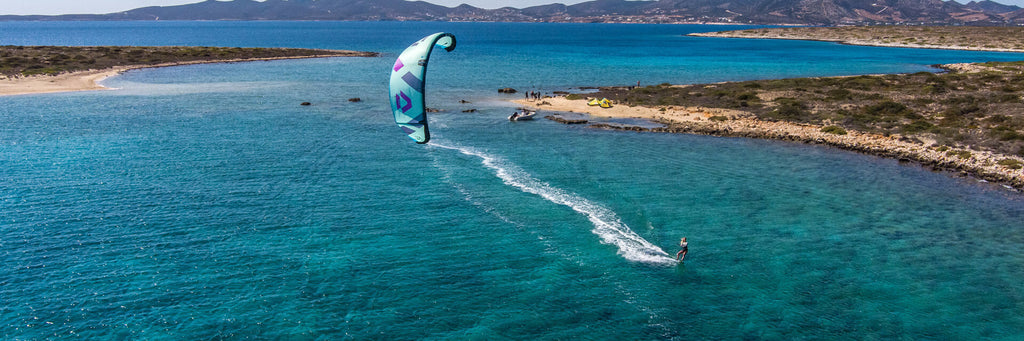
Kiteboarding, or kitesurfing, is one of the most exhilarating sports and combines aspects of surfing, wakeboarding, paragliding, and more. Imagine being able to pull off all your favorite wakeboard moves without the assistance of a boat. Ride wherever you want with only the tranquil sound of the wind in your ears. Jump 30 feet off flat water without a ramp. Surf more waves in one day than you ever thought possible. Ski or snowboard across miles of snow-covered fields with only the assistance of a kite.
Kiteboarding is challenging to learn, but it does not require much physical strength. The harness takes most of the load away from your arms, allowing kiteboarders to ride for hours non-stop. Most people in good physical condition can learn to kiteboard, even kids. The most challenging part of the learning curve is controlling the kite. The good thing is, most of these vital steps to kiteboarding can be learned on a smaller-sized 'trainer kite' which allows you to understand the basic steps while only dealing with a fraction of the power.
Over the past few years, many advances in kiteboarding have been made. The gear is now a lot safer and the learning curve is much less steep. What used to take people months to learn now only takes days. Even though kiteboarding has become so much easier to learn, lessons are still mandatory. Without the proper instruction things can turn ugly real quick, which is why taking lessons is so vital.
Kiteboard packages start around $1800 - $3000 for a kite, lines, pump, control bar, harness, and board.The good thing is, wind is free. And if you're a skier or snowboarder, strap your skis/board on your feet and strap onto a kite to ride along snow-covered fields for some riding all year long without the hefty price of lift tickets.
For a complete kiteboarding FAQ go here- http://kitesurfingschool.org/faqs.htm

Kite Buggy FAQ
Common questions about kite buggying answered.
What is kite buggying?
Imagine flying a large kite, large enough to pull you a few meters when ''powered up', and then sitting in a three-wheel stainless steel vehicle using foot pegs on the single front wheel to steer. Now using the kite for power steer the buggy in a direction approximately at right-angles to the wind direction on a relatively hard surface, sand, grass or may be even tarmac. And that's the basics of kite buggying!
What is a power or traction kite?
A power or traction kite is a larger version of your ordinary kite or stunt kite. A power kite will have a larger surface area than other kites and consequently when in flight, rather than the wind power just keeping the kite up, the wind power is used to pull the kite flyer as well. Note that in a very strong wind a stunt kite will achieve the same affect!
How big are power kites?
The kites vary in size as small 2 metres square up to whatever you feel safe with! Usually no more than 12 metre square is required in a light wind for buggying. Kite surfers usually require larger kites as they require more power.
Are power kites easy to fly?
There is a learning curve involved with flying a power kite, but once you have mastered the basics, which doesn't take long, then you have probably got enough knowledge to be able to buggy in a straight line. However the more you practice with a power kite before jumping in a buggy the better. The more comfortable you are in using the kite, the more you will be able to concentrate on controlling the buggy. The best way to start out is to fly your kite in a slighter lighter wind than recommended just to get use to the 'feel' of the kite. As you spend more time flying the kite, you will begin to feel more comfortable with higher wind speeds.
Is it a dangerous sport?
There is an inherent danger involved with the sport - at the end of the day you are sitting or strapped into a large metal object, traveling at potentially high speeds, holding on to a kite at the mercy of the wind. However kite buggying's safety record is very good and with with the right safety gear the average buggier should never receive a bad injury. Regarding safety gear, most power kites should come with some sort of emergency release system to enable you to get rid of the kite if it starts to get too much. Protection gear should also be worn, such as helmet, shades (keeps sand out of the eyes on beaches), good sturdy footwear and may be knee and elbow pads.
What surface is best for buggying?
Hard compact sand is probably the most popular surface for buggying. Soft sand is OK if you have wide wheels often called bigfoot wheels. Grass is OK too although harder work. Tarmac is the best for speed runs although finding a spare piece of tarmac not used by other larger vehicles is a bit of a problem!
ATB and Landboard FAQ

Kitelandboards are mountainboards that powerkiters have made use of to move about. To look at they're just like large skateboards with longer decks and trucks to give stability complete with larger wheels to allow you to use them on rougher terrain.
Using the kite for traction, a kitelandboard can be manoeuvred around open space simulating snow boarding without the snow or surfing without the water. With rider skill they are capable of achieving speeds of over 40mph and achieve all manners of tricking and manoeuvring.
As you resist against the pull of the kite - the power is transmitted to the wheels of your board. By manoeuvring the kite and board it will enable you to pick up speed, stop, perform tricks and with practice get airs even in low winds.
Because the kite provides so much lift it will actually help you balance on the board and allow a skilled pilot to easily achieve big airs if you're that way inclined. Once rolling you can quickly pick up speed.
Once you've learnt where to position the kite in the sky and how to balance on the board, you’re away and can travel in any direction, even upwind.
Which Board for me?-
We are all different sizes, heavier or stronger pilots may require a heavier, stronger and more stable board.
Lighter weight pilots often require boards that are easy to manoeuvre do tricks or even get air.
Consider yourself - Weight and Height
If you are not comfortable on the board it spoils your fun and capability.
Steering and suspension set ups often have some form of modification or adjustment available for control, comfort or enhancement.
Check the product details as we will always tell you. If it says "Ready to fly" it comes with lines.
More information on flying your stunt kite can be found here- http://www.prismkites.com/tips.html